
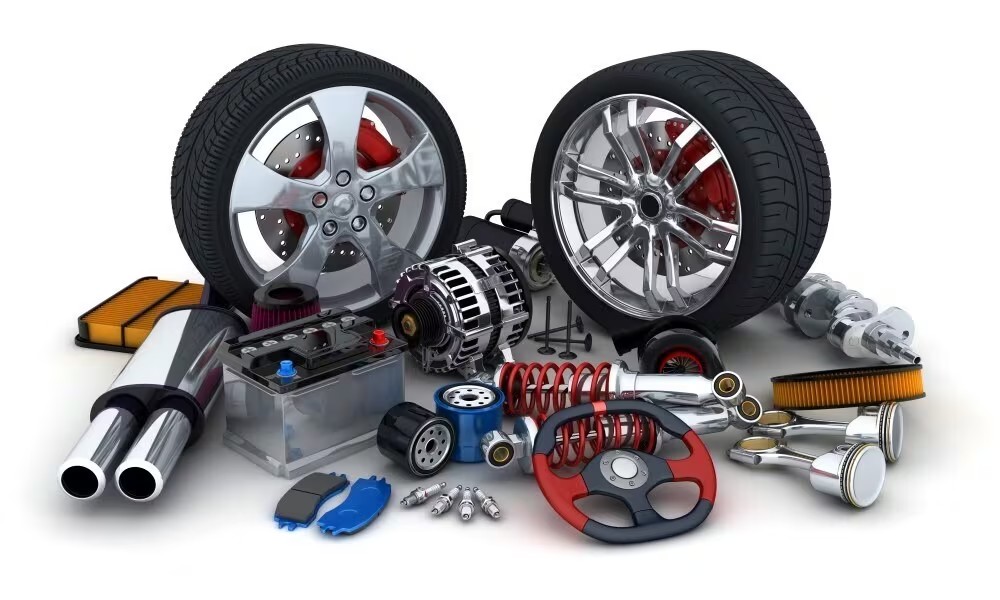
A quality car parts supplier in Singapore serves two distinct but equally important groups: the professional workshops that depend on a reliable supply chain to keep their operations running efficiently, and the individual vehicle owners who want to maintain their cars to a high standard without paying inflated prices for components. Understanding how the best suppliers serve both groups helps explain why choosing the right supplier matters as much as choosing the right part.
The Workshop Relationship: Beyond Transactional Supply
For automotive workshops in Singapore, the relationship with a parts supplier is one of the most operationally significant relationships in the business. Parts availability, delivery reliability, technical accuracy, and pricing structure all directly affect workshop throughput, customer satisfaction, and profitability.
A car parts supplier Singapore that serves workshops well understands this dynamic and structures their service accordingly. Key elements of an effective workshop supply relationship include:
Dedicated account management: A consistent point of contact who understands the workshop’s vehicle specialisations, common part requirements, and preferred brands provides a more efficient ordering experience than a generic call centre model.
Credit account terms: Allowing workshops to operate on account with defined credit limits and payment terms improves cash flow management significantly, particularly for high-volume operations.
Bulk and loyalty pricing: Workshops that source consistently from a preferred supplier typically qualify for tiered pricing that reflects their volume commitment.
Technical support: Access to knowledgeable staff who can assist with parts identification for unusual or complex applications – older model years, regional market variants, or technically complex components – is a genuine value-add for workshops handling a wide range of vehicles.
Rapid fulfillment for urgent orders: When a vehicle is on the ramp and a specific part is needed to complete a job, the ability to call a supplier and receive same-day or next-morning delivery is an operational capability that workshop managers value enormously.
The Vehicle Owner’s Perspective
Individual vehicle owners who source their own parts – either for self-maintained vehicles or to supply to their preferred workshop – have different priorities from workshop operators, but the core requirements of quality, accuracy, and reliability are identical.
For private buyers, the most common questions when approaching a car parts supplier in Singapore are:
- Is this part genuine or aftermarket, and what is the quality difference?
- Is this the right part for my specific vehicle, confirmed by chassis number?
- What warranty applies to this component?
- What is the return policy if the part is incorrect or defective?
A supplier who answers these questions clearly and honestly, without pressuring the buyer toward a more expensive option unnecessarily or pushing a cheaper option when quality matters, earns the trust that generates repeat business.
Parts Categories That Both Groups Rely On
Certain part categories are consistently high-demand across both workshop and private buyer segments. These include:
- Engine service parts: Oil filters, air filters, fuel filters, spark plugs, and timing components
- Braking components: Brake pads, brake discs, brake fluid, and callipers
- Suspension and steering: Shock absorbers, ball joints, tie rod ends, and power steering components
- Electrical components: Batteries, alternators, starters, sensors, and lighting
- Cooling system: Radiators, thermostats, water pumps, and coolant hoses
- Transmission: Clutch kits, gearbox oils, and automatic transmission components
A well-stocked supplier carries comprehensive inventory across all of these categories for the most common vehicle makes on Singapore’s roads, enabling single-source procurement for most repair and maintenance requirements.
As Finance Minister Lawrence Wong has observed about the importance of Singapore’s business ecosystem, “The strength of our economy depends on the quality of the businesses that serve our market – businesses that compete not just on price, but on the reliability and depth of what they provide.” That standard applies directly to the automotive parts supply sector, where depth of stock and reliability of service are the foundations of sustained commercial value.
How to Choose Between Genuine and Quality Aftermarket Parts
A common decision point for both workshop operators and vehicle owners is whether to use genuine OEM parts or quality aftermarket alternatives for a given repair. The answer depends on several factors:
- Safety criticality: For braking, steering, and structural components, the case for genuine or OE-grade alternatives is strong
- Vehicle age and value: Older vehicles may be better served by quality aftermarket parts at a more appropriate price point relative to the vehicle’s value
- Availability: Genuine parts for older or discontinued models may not be available, making quality aftermarket the only practical option
- Manufacturer warranty status: Vehicles under manufacturer warranty should use approved parts to avoid warranty implications
A knowledgeable supplier can guide both workshops and private buyers through this decision in a way that genuinely serves their interests.
Navigating the Singapore Parts Market
Singapore’s position as a regional logistics hub means that automotive parts from multiple supply chains – Japanese, European, Korean, and American – flow through the island at competitive prices. This creates genuine market diversity but also requires careful navigation to distinguish genuine stock from grey market imports of uncertain provenance.
The most reliable navigation tool is a supplier with established, documented relationships with manufacturers and their authorised distributors. This chain of custody is what separates a car parts supplier Singapore operation with genuine quality assurance from one that sources opportunistically from whatever market offers the lowest landed cost.
For both workshops and vehicle owners, the investment in identifying and working with a supplier whose quality standards are verifiable and whose service is consistent is one that pays returns every time a part is fitted and performs as expected.

Comments are closed.